
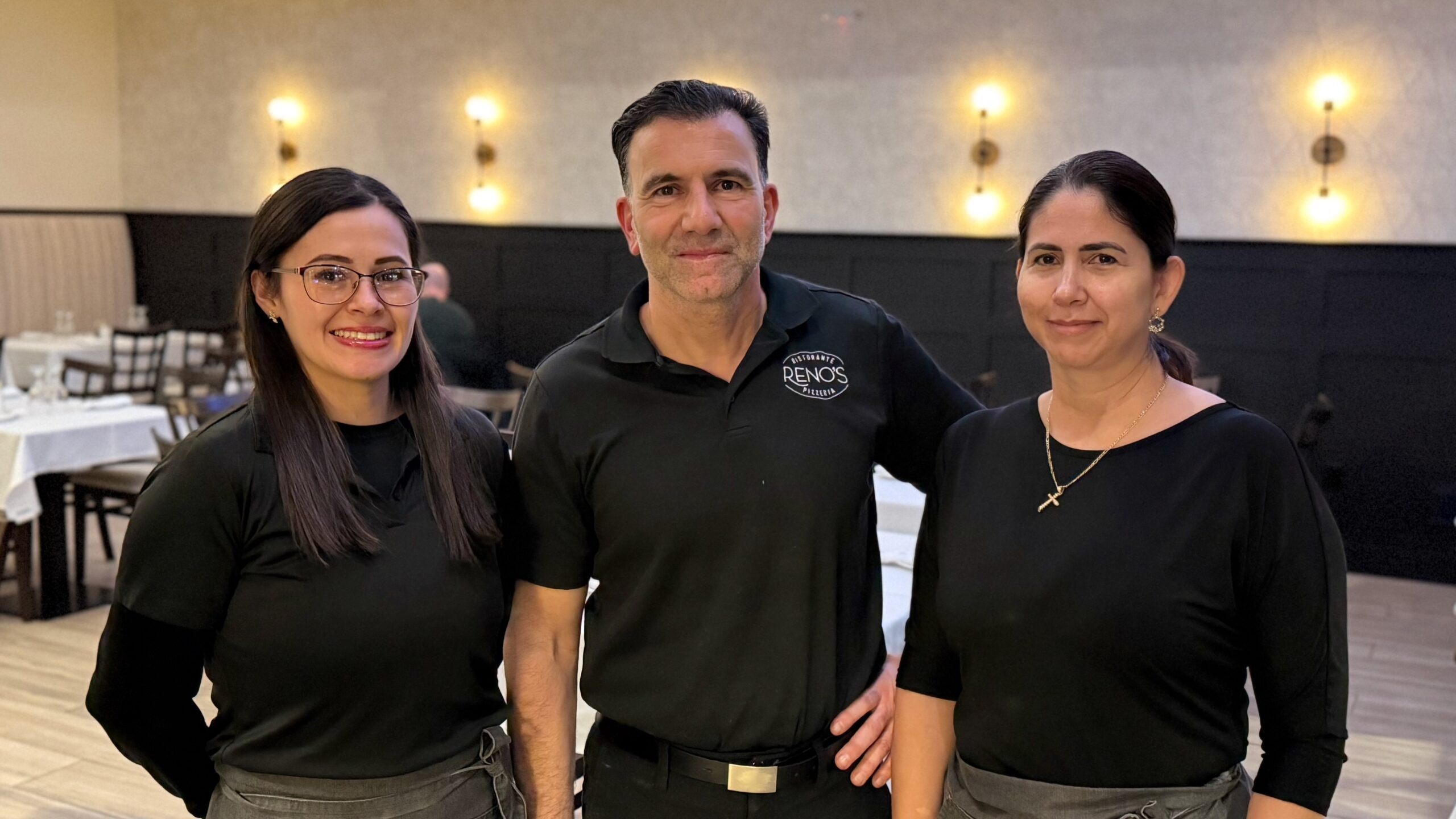

Reno’s Ristorante and Pizzeria began with loss: an earthquake in southern Italy in 1981 that took a family’s home but not their resolve. From the rubble of that disaster, a temporary U.S. relief program opened a door, flying a young family across an ocean with little more than paperwork and hope. A 12-year-old boy who spoke no English watched his father head straight into a kitchen, working impossible hours until, within a year, he had fulfilled his American dream by buying a house. That boy was Reno.
From Maria’s to Reno’s
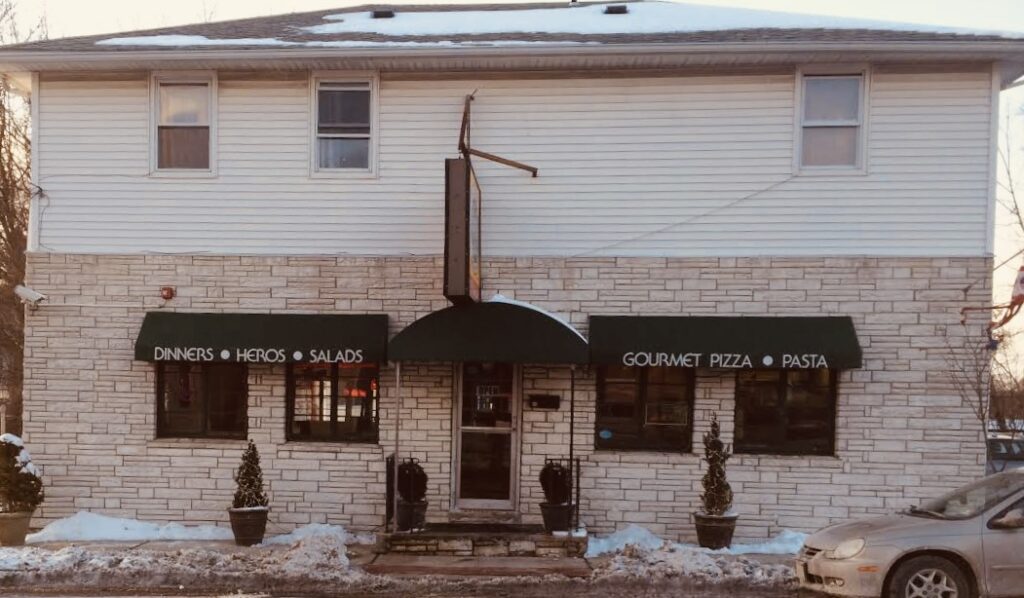
In 1987, Reno’s parents opened Maria’s Pizzeria at 49 North Main Street. It was intimate, loud, and simple—slices at the counter, kids coming in after school, the kind of place where the owners knew your family’s order before you reached the register. Reno grew up in that restaurant, his dad at the stove, his mom out front, both repeating the same quiet charge: “This is your place, son.”
For twenty years, Maria’s Pizzeria was the family’s foothold in a changing town. In 2007, Reno did what many second-generation children of immigrants dream of. He bought the business from his parents. The ownership would change, but the soul stayed the same: family, work, and a stubborn refusal to quit.
A Taste of Home, Not Just a Slice
For years, Reno’s dream was to give Wharton both a pizzeria and a restaurant under one roof—a place where you could grab a slice for lunch, and where you could sit down for a lingering meal that tasted like the food he grew up with.
Today, when you walk into 49 North Main, the division is intentional. On one side, the pizzeria still hums with kids in hoodies, backpacks slung over chairs, shouting orders for slices as they crowd tables. On the other side, the dining room opens up: couples leaning across candlelit tables, multigenerational families passing plates of pasta, anniversary toasts raised with bottles brought from home.
The menu reaches far beyond the counter slice: cavatelli with broccoli rabe and sausage, seafood dishes, chicken and veal prepared the way his family did it back home. The pizza dough and sauce are made fresh daily, the kitchen working through years of trial and error to get each detail right. Reno speaks with quiet pride about the “mistakes, and redoing and redoing and doing it” that shaped the food into what it is now.
If you always order the same thing, he’d tell you gently that you’re missing the point. Reno doesn’t see his place as “just a slice joint”; he sees it as a doorway into his family’s table, a way to give Wharton more than a quick bite on the way to somewhere else.
Anchored Through the Storm
Next year, Reno’s will mark forty years in Wharton. On Main Street where businesses have come and gone, Reno’s is one of the town’s oldest remaining anchors. Over those decades, he’s watched a blue-collar mining town evolve into something more complex: still hardworking, still modest, but layered now with new buildings and new expectations for what Main Street can be.
The recent years have tested that endurance. When the pandemic hit, Reno braced for the worst, but something surprising happened: takeout and delivery exploded, and the pizzeria stayed busy enough that COVID, for all its fear and uncertainty, actually helped provide the stability he needed.
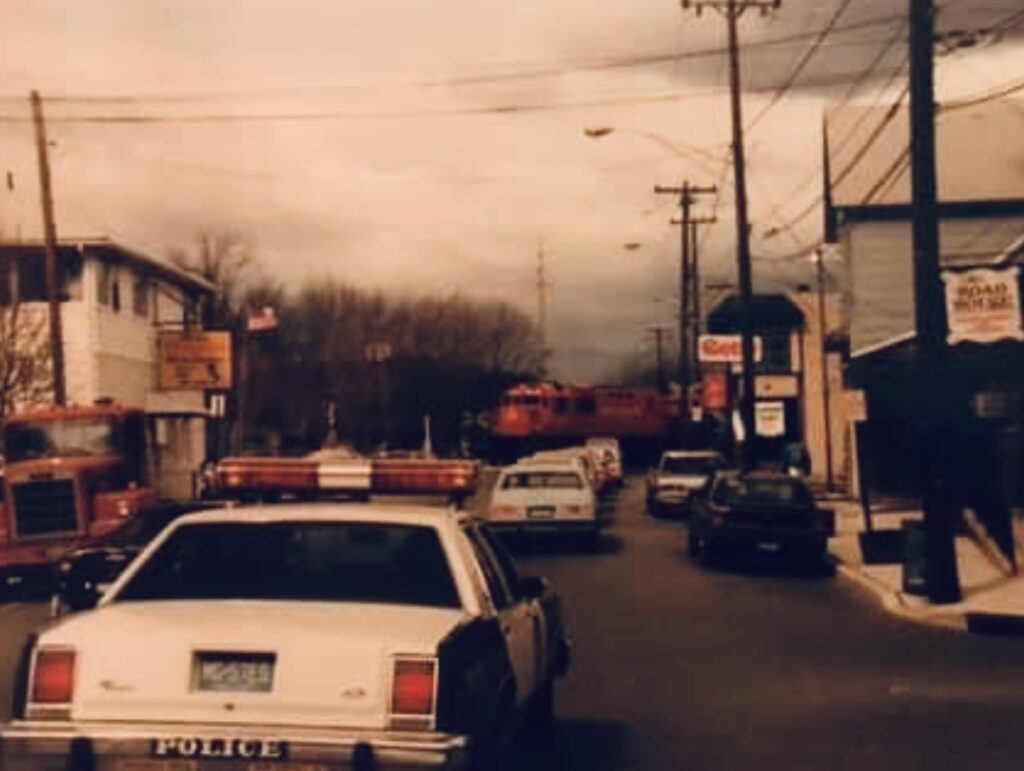
Then came the Interstate 80 sinkholes. Overnight, traffic that used to skim past Wharton was rerouted directly through its core, turning North and South Main Streets into a parking lot. Customers stopped coming, not because they didn’t want the food, but because the fifteen-minute drive for lunch had turned into an hour trapped in gridlock. For Reno, the impact was brutal: business dropped around 40%, deliveries all but disappeared, and the grand reopening of his expanded restaurant landed in the middle of a traffic nightmare.
“I was at a point where I don’t want to say I gave up,” he admits. “But there was pretty much nothing left here for us.” A forty-year foundation could have cracked in a matter of months.
Faith, Risk, and the Cost of a Dream
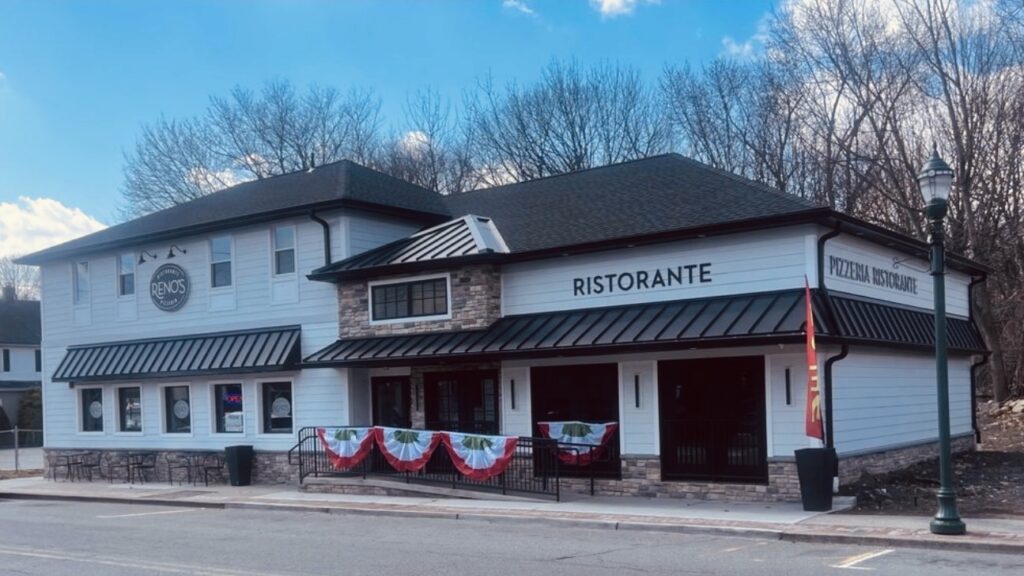
The new dining room you see when you walk into Reno’s did not appear overnight. It took ten years of dreaming, drafting, redesigning, and waiting as economic reality shifted beneath his feet. The borough’s administration helped navigate approvals; without them, he says, it would never have happened. COVID paused the project, then interest rates spiked, doubling the cost of the mortgage that would finance his expansion.
The answer, for him, runs straight through his faith. “Deep in my heart,” he says, “I said, if God is telling me that I need to move forward with this, then I’ll just follow His way.” He’s Catholic, he’ll tell you, not practicing as much as he thinks he should, but anchored by a belief that the story of his life—and his restaurant—is not his alone to write.
That belief doesn’t erase the cost. Running a restaurant, he says, “is like you’re married.” There is no clocking out. There are missed games, school events he couldn’t attend, family moments that happened without him because the ovens needed tending and the Friday night rush wouldn’t wait. He’s quick to point to his wife as the reason any of this has been possible at all. Without her, he acknowledges, the sacrifices might have been too heavy for his family to bear.
He doesn’t speak in polished sound bites. He’s more likely to say that it “humbles” him when customers who were kids at his counter now return as parents, ushering in their own children to the same address. They sit in a dining room that looks nothing like the one they remember, but the smells, the faces, the feeling—it pulls them back to their childhoods in an instant.
“No,” he says when asked about regrets. At this point in his life, he’s grateful—for what he has, for what the town has given his family, and for the chance to keep going a while longer.
A Town Worth Fighting For
If you ask Reno about the changes in Wharton, he doesn’t flinch. New apartment buildings, new traffic patterns, new faces—he knows some residents worry about all of it, and he understands the discomfort. But from his vantage point behind the counter, he’s convinced of one thing: “If you don’t change, you die.”
He’s experienced Main Street at its lowest, “just about dead” a decade ago, its storefronts tired and outdated. Now, he sees new buildings rising, better lighting, cleaner streets, upgraded parks, and a public works crew that, in his words, “works so much nicer than it used to.” A new public parking lot behind the Main Street corridor is being planned, part of a broader effort to ease the very problem he identifies as the town’s biggest barrier: where to put your car when you want to support local businesses. “People don’t like to parallel park,” he says with a half-smile. “They want to pull up on a lot and just roll away.”
Still, there’s no pretending it all snapped back overnight. When the road finally reopened and detours cleared, Reno assumed customers would immediately return. Instead, he learned a hard truth: in the months of gridlock, people formed new habits. The clientele it took forty years to build was, in many ways, gone. Now he stands in a larger, more beautiful space with a new name on the sign and a simple question: how do you introduce yourself again to a community you’ve quietly served for decades?
Looking Ten Years Ahead
He wants the restaurant side to grow into a full-scale events space, the kind of room where, in a single week, you might see a rehearsal dinner, a baptism luncheon, and a Sunday family gathering around a long table for pasta.
He’s clear about what he doesn’t want. Reno’s is not meant to be exclusive. It’s not a place where linen on the tables translates into prices that shut people out. The dining room may look “better than it should,” he jokes, but the heart of his model is value: a beautiful space, generous plates, and a BYOB policy that lets you bring the bottle that means something to your table without paying a premium for it.
He keeps going, he says, not just for himself. He works as hard as he does to give his children—and the employees who staff his kitchen and dining rooms—a chance to move forward, to learn, to build something of their own. He talks about his grandchildren now, too, another generation who might one day run between the tables of a restaurant that started as a lifeline after an earthquake half a world away.
That earthquake sent a family across an ocean. What stands on North Main Street is what they made of it, and what they’re still building.
